Robotics · Mechanical design · Simulation
Scrambler
A passive, sensor-free hand and a trained climbing policy that let a humanoid robot scramble up steep, icy terrain on all four limbs.
At around 30 degrees, people stop walking and start using their hands. Mountaineers call it scrambling. A Unitree G1 humanoid can't: its hands are solid blocks, with no grip and no actuation. Scrambler is an integrated robotic system for humanoid scrambling on extreme terrain, built from a passive hand, sensing without added electronics, and a simulation that trains the robot to climb on all four limbs.
The passive hand. TPU flexures, tuned with FEA, and no motors.
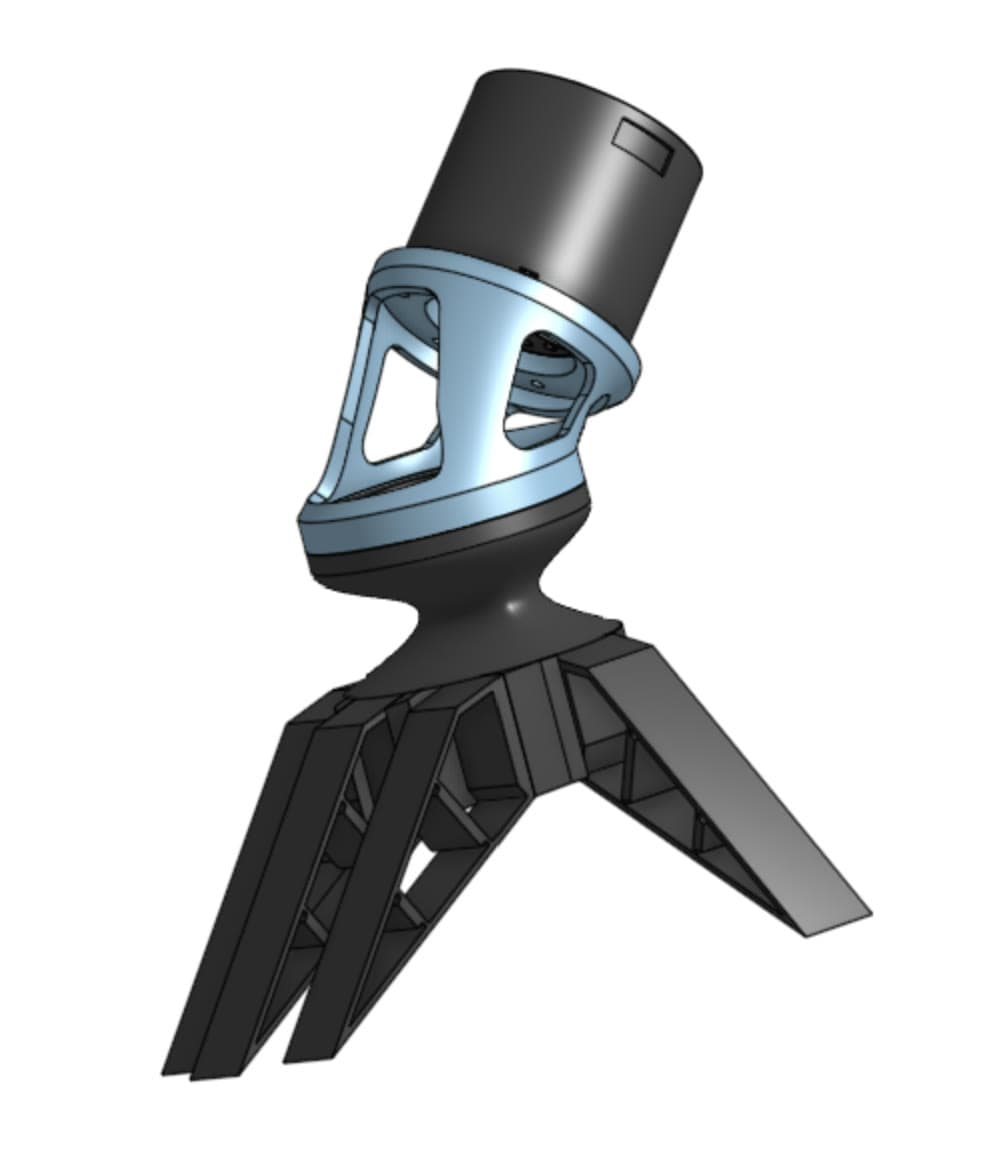
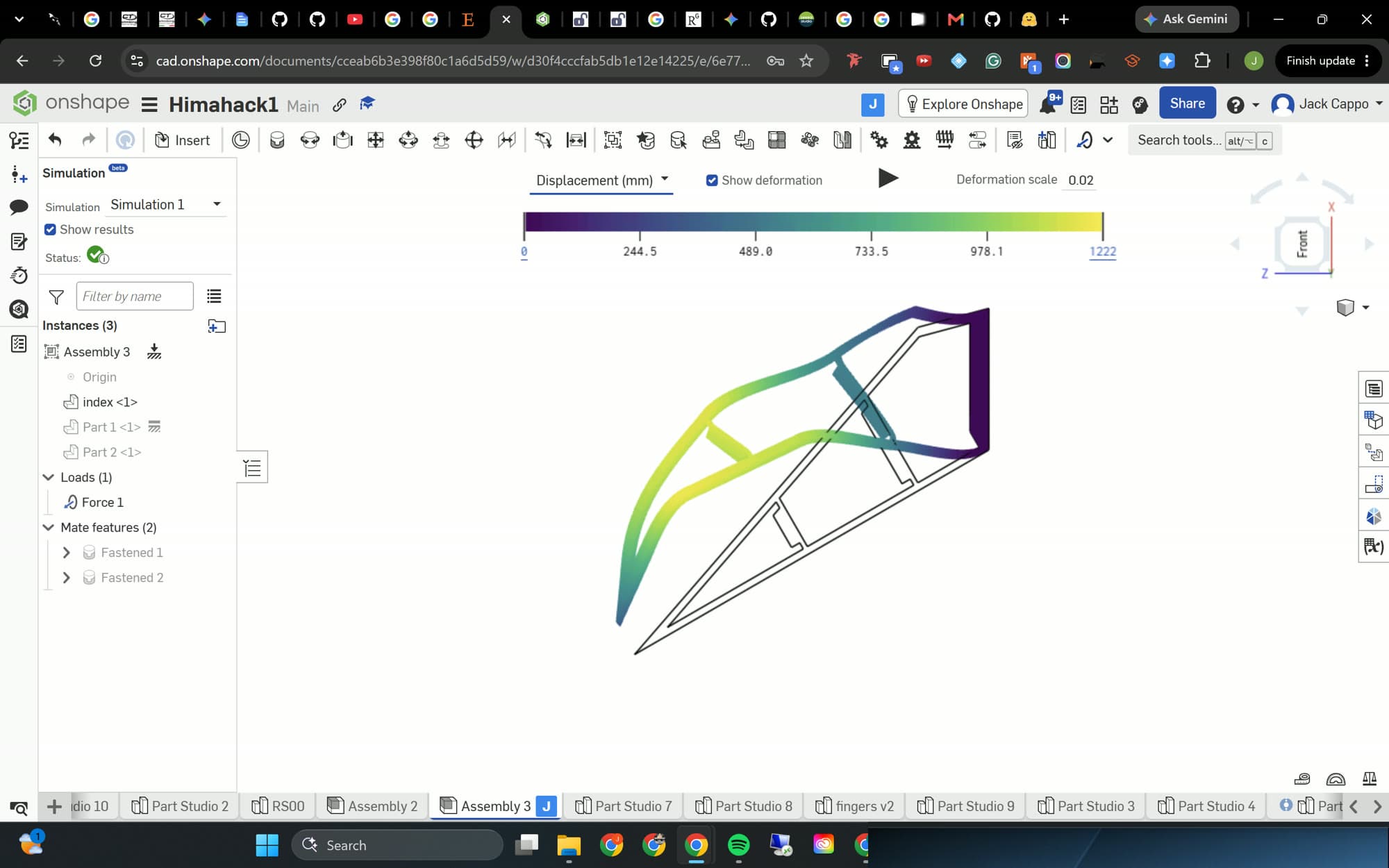
The hand is entirely passive. The wrist and fingers are printed in TPU, so they absorb impacts and conform to the terrain, and the fingers are built on thin flexures that curl inward to grab whatever they touch. FEA was used to tune the wrist and finger geometry, trading compliance against the buckling limit. Removable micro-spikes adapt the same hand to rock, snow and ice. Nothing is motorized, on purpose: no new wiring, thermal management or power draw at sub-zero temperatures means fewer ways to fail.
CAD
Finger FEA
Sensing without electronics. AprilTags on every finger joint, read by the robot's own cameras.
Sensing works without electronics too. An AprilTag on every finger joint rotates as the finger flexes under load, and homography recovers each tag's pose from a single camera frame. From that, the finger's curvature is reconstructed and scored for how well it has engaged the surface, telling the robot whether a hold is strong or about to slip. It runs on the cameras the G1 already has, so the tactile feedback adds no failure points.
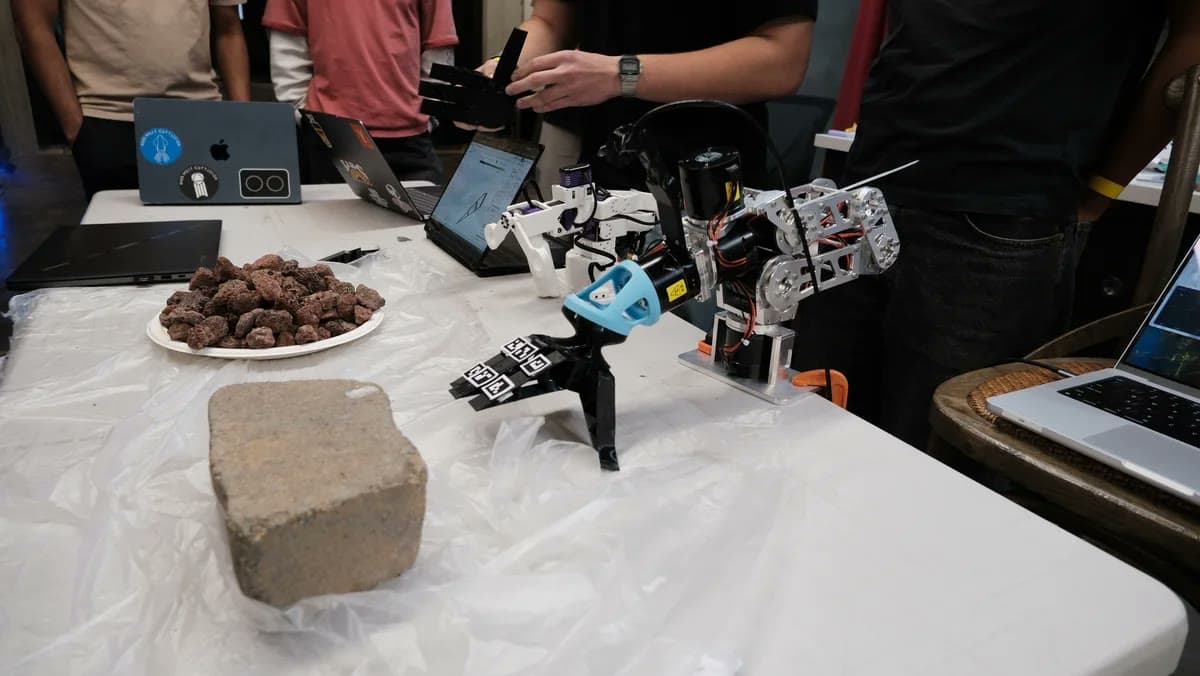
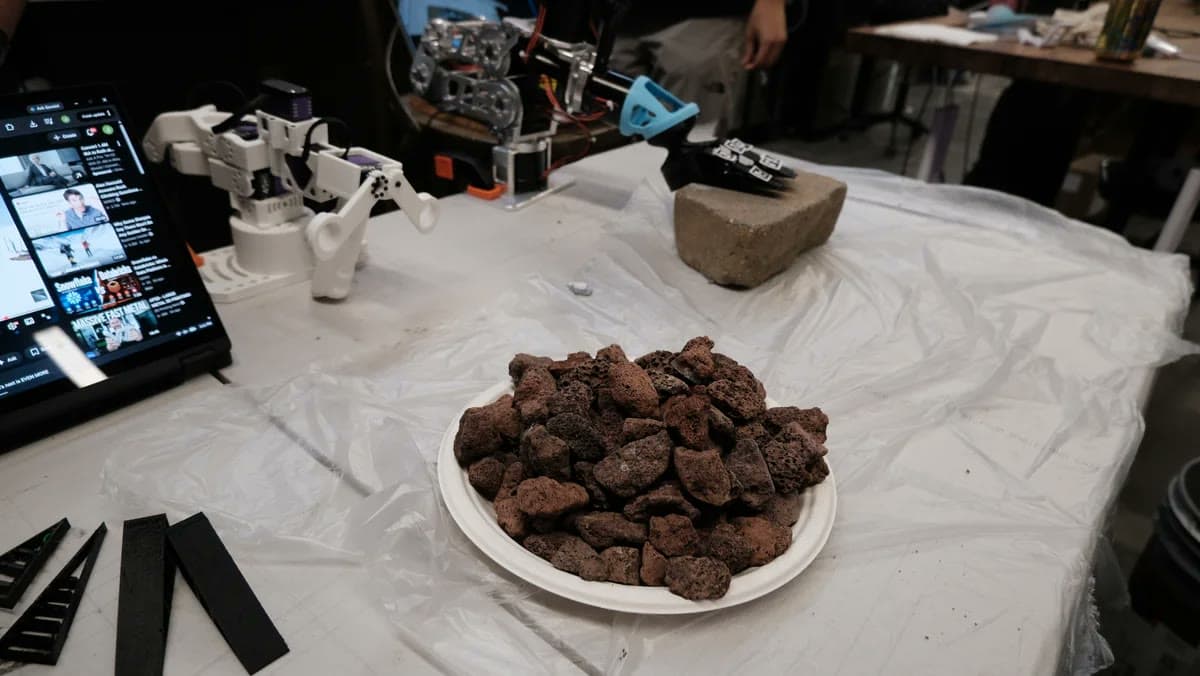
At the workbench
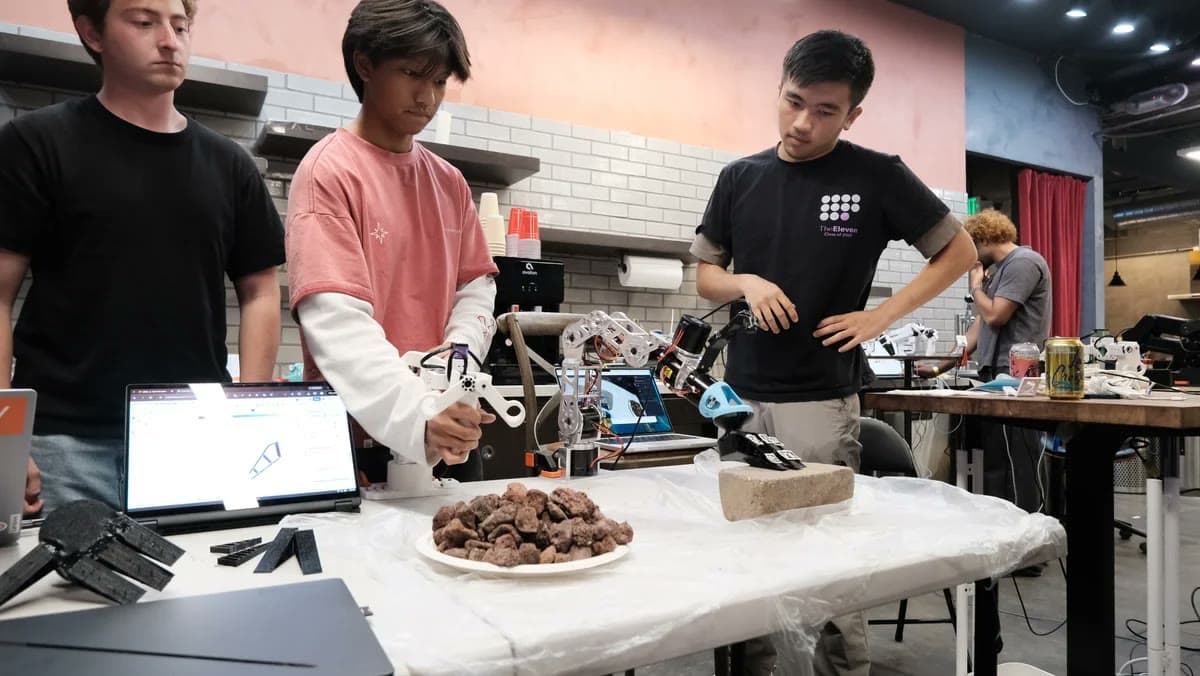
Demo table
Simulation. Training the G1 to climb on all four limbs.
Reading the G1's URDF showed the real bottleneck: the wrist joints tolerate five times less force than the elbow. Compliance in the hand and forearm absorbs the contact and redirects the load path into the elbow. The robot was then trained on a 45° slope with domain-randomized ice, snow and rock, variable wind and friction, dropping onto all four limbs with the legs generating propulsion and the hands providing stability, ledge support and fall arrest.
Stability simulation
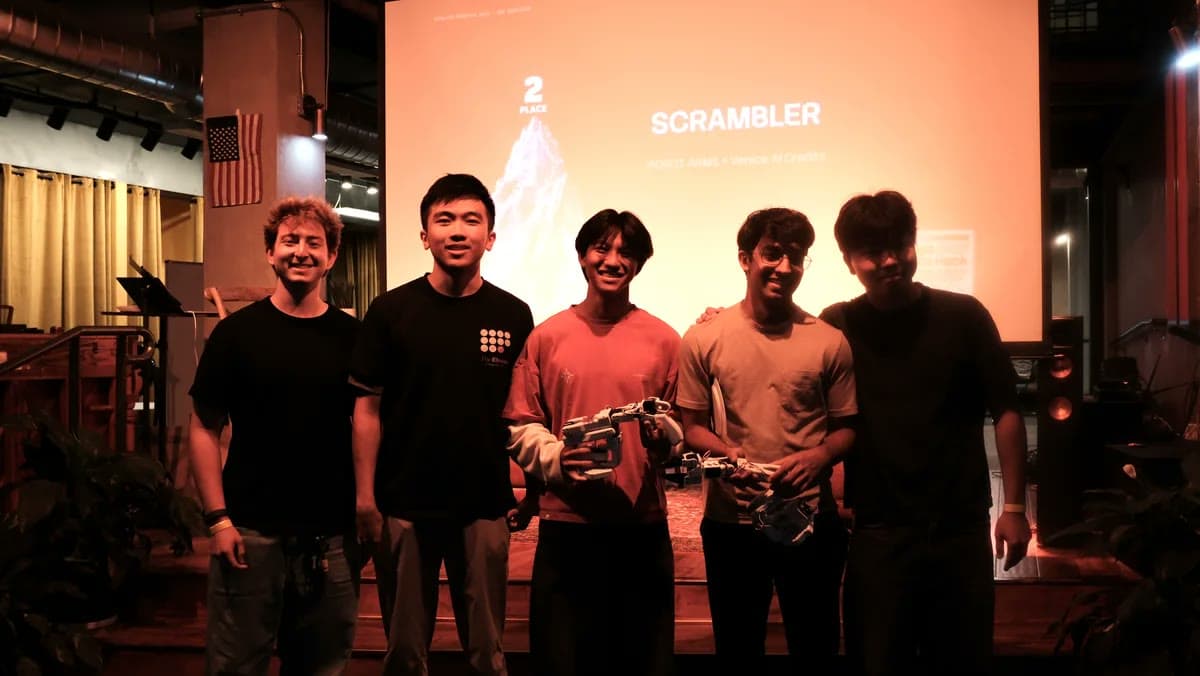
Team. On stage with the arms.